Muha Meds Strains: A Complete Guide to Strain Types, Names, and Flavors
Understanding Muha Meds strains can help readers make sense of the strain names, flavor descriptions, product labels, and classifications associated with the Muha Meds brand. When researching a particular product, it is important to distinguish between a strain name, a flavor description, a product format, and a claim about the effects of cannabis. These terms are related, but they do not mean the same thing.
This comprehensive guide to Muha Meds strains explains common strain classifications, how strain names are used, how flavor descriptions should be interpreted, and what consumers should check when reading product information. It also explores the importance of authenticity, clear labeling, responsible purchasing, and legal compliance.
Whether you are researching Muha Meds strain names for general information or comparing product descriptions, the goal is to help you evaluate the available information carefully instead of relying on assumptions based on a product name alone.
For brand and product information, begin with the Muha Meds Flavor website. You can also explore the existing Cereal Milk product page to see an example of how a named cannabis product may be described in terms of flavor.
What Are Muha Meds Strains?
The phrase Muha Meds strains generally refers to the strain names and strain-related descriptions associated with products marketed under the Muha Meds name. A strain name may identify a recognized cannabis cultivar, a product’s advertised variety, or a name used to distinguish one product from another.
However, a strain name by itself does not confirm the complete composition, potency, cultivation history, or laboratory results of a product. Those details depend on the particular item, its source, its labeling, and any reliable documentation available for it.
For example, a product description might mention a familiar strain name alongside a flavor profile. The name may suggest a particular aromatic character, but it should not automatically be treated as proof that every product carrying that name has an identical chemical profile or produces identical effects.
When researching Muha Meds strains, consider four separate questions:
- Strain identity: What strain or cultivar name is printed on the product or stated in the product description?
- Product format: Is the item described as flower, a pre-roll, a cartridge, an all-in-one device, an edible, or another format?
- Flavor description: What aromas or taste characteristics are advertised, and are they supported by reliable product information?
- Product verification: Is there credible evidence of the product’s origin, labeling, ingredients, and laboratory testing where applicable?
Separating these questions makes it easier to compare Muha Meds strain information without confusing marketing language with verified product specifications.
Understanding Indica, Sativa, and Hybrid Classifications
One of the most common questions about Muha Meds strains concerns the terms indica, sativa, and hybrid. These labels are widely used in cannabis product descriptions. They can help organize products, but they should not be treated as precise guarantees of a product’s chemical composition or effects.
What Does Indica Mean?
In commercial cannabis terminology, indica is commonly used as a category for certain cannabis varieties. Some product descriptions associate indica-labeled products with earthy, herbal, woody, or sometimes sweet aromatic characteristics.
Nevertheless, the indica label alone cannot establish a product’s cannabinoid concentration, terpene profile, purity, or expected effects. Products can differ substantially even when they share the same broad classification.
When researching an indica-labeled Muha Meds product, look beyond the category name. Check the exact product label, the product format, the ingredients where applicable, and any accessible independent laboratory results. Avoid assuming that every item labeled indica has the same composition or level of risk.
What Does Sativa Mean?
Sativa is another widely used category in cannabis marketing. Product descriptions sometimes associate sativa-labeled varieties with citrus, fruit, herbal, floral, or other aromatic notes. These associations are descriptive conventions rather than reliable guarantees about the experience a product will produce.
Consumers researching Muha Meds sativa products should examine the information available for the specific product instead of relying exclusively on the sativa label. The label does not replace laboratory testing, ingredient information, or an accurate description of the product’s cannabinoid content.
It is also important not to interpret the category as a promise that a product will improve focus, energy, creativity, or mood. Individual responses to cannabis can vary, and cannabis use can impair attention, coordination, judgment, and reaction time.
What Does Hybrid Mean?
Hybrid is generally used to describe cannabis varieties associated with both indica and sativa lineages. In product listings, the term may help distinguish a marketed variety from products labeled exclusively indica or sativa.
However, hybrid is a broad classification. It does not reveal a product’s exact cannabinoid concentrations, terpene content, cultivation methods, or effects. Two products described as hybrids can have different chemical profiles and may not be comparable in other important ways.
When a Muha Meds strain is described as a hybrid, treat that label as one piece of information rather than a complete product assessment. Look for additional details that can be checked independently.
Are Indica, Sativa, and Hybrid Labels Enough?
No. These classifications provide a convenient vocabulary, but they are not substitutes for product-specific evidence. The scientific relationship between commercial strain labels, chemical composition, and reported effects is more complicated than a simple three-category system suggests.
For an informed comparison, prioritize the exact product identity, verified ingredients, cannabinoid information where available, and reliable testing. Flavor descriptions and broad strain categories can provide context, but they should not be the only basis for evaluating a cannabis product.
Muha Meds Strain Names and Why They Matter
Strain names are often among the first details readers notice when researching Muha Meds strains. A name may distinguish one advertised variety from another, provide a point of reference for a flavor description, or help identify a particular listing.
However, familiar names can be used inconsistently across the cannabis market. A strain name appearing on two different products does not necessarily mean those products are identical. Differences may involve cultivation, formulation, ingredients, cannabinoid concentrations, terpene composition, or manufacturing practices.
For this reason, strain names should be checked alongside the other information provided for the specific product. If a listing includes a strain name but omits essential details, do not fill in the gaps with assumptions based on what the name means elsewhere.
How to Research an Individual Strain Name
When investigating a particular Muha Meds strain, follow a consistent research process:
- Record the exact name. Copy the wording from the product packaging or listing, including any additional descriptors.
- Identify the product format. Establish whether the name refers to flower, a disposable device, a cartridge, an edible, or another product.
- Review the full description. Check whether the description identifies a flavor, classification, ingredients, or other product characteristics.
- Look for verifiable specifications. Where relevant, seek a batch-specific certificate of analysis from a qualified laboratory.
- Check the source. Compare the product information with reliable brand information and applicable regulatory requirements.
- Avoid unsupported assumptions. Do not infer potency, authenticity, safety, or effects from the strain name alone.
This approach is more dependable than relying on lists of strain names copied from unrelated websites. A list can be useful for discovering terminology, but each product still needs to be evaluated using its own evidence.
Muha Meds Strains and Flavor Profiles
Flavor descriptions are an important part of how cannabis products are presented online. A description may mention sweet, creamy, fruity, citrus, earthy, herbal, woody, or dessert-like characteristics. Such terms are intended to communicate an advertised sensory profile.
However, a flavor description is not a laboratory result. It does not independently establish which compounds are present, how concentrated those compounds are, or whether a product has been tested for contaminants.
When reading Muha Meds strain descriptions, distinguish between the following types of information:
- Advertised flavor: The taste or aroma a listing claims to describe.
- Strain classification: A category such as indica, sativa, or hybrid.
- Product ingredients: The substances actually listed as ingredients, where applicable.
- Laboratory findings: Test results documenting particular measurements for a specific sample or batch.
These categories may complement one another, but they are not interchangeable. A product described as fruity does not necessarily contain a particular fruit ingredient. Similarly, a dessert-inspired name does not prove that the product contains the foods suggested by the name.
Sweet and Dessert-Inspired Profiles
Sweet or dessert-inspired language is common in cannabis product descriptions. Words such as creamy, sugary, vanilla-like, or bakery-inspired may be used to communicate an advertised aromatic impression.
The name Cereal Milk is one example of a dessert-inspired product name. The Cereal Milk product page on Muha Meds Flavor describes sweet, creamy notes alongside fruity undertones.
This example illustrates how a product description can communicate an advertised flavor profile. It does not establish that every product called Cereal Milk has the same ingredients, chemical composition, or sensory characteristics. Details should always be checked against the specific item being researched.
Fruity and Citrus Descriptions
Fruity and citrus terminology may refer to aromas described as berry-like, tropical, lemon-like, orange-like, or generally fruit-forward. These words can help readers understand how a product is presented, but they should not be treated as proof of actual fruit content.
For products that are inhaled, the flavor language used in marketing does not determine the product’s safety. Inhaled cannabis products can carry health risks, and unverified formulations may introduce additional uncertainties. Readers should prioritize reliable product information over attractive flavor descriptions.
Earthy, Herbal, and Woody Descriptions
Earthy, herbal, and woody are broad descriptive terms used in discussions of cannabis aroma. They may be associated with plant-like, forest-like, peppery, or otherwise complex sensory impressions.
These descriptors do not identify a product’s complete terpene profile. Even when a product is described as earthy or herbal, the precise compounds responsible for its aroma cannot be established from the wording alone.
Why Flavor Names Should Not Be Confused With Ingredients
A product name or flavor label may be creative, evocative, or intended to distinguish one listing from another. It is not necessarily a complete ingredient statement.
For example, a dessert-inspired name does not prove the presence of dairy, cereal, sugar, or any other specific ingredient. The same principle applies to fruit-inspired and candy-inspired names. Readers with allergies or dietary concerns should consult the actual ingredient declaration and appropriate product documentation rather than infer ingredients from the name.
How to Compare Muha Meds Strains Fairly
Comparing Muha Meds strains requires more than arranging names into a list. A meaningful comparison should use consistent criteria and should distinguish verified information from claims that have not been independently confirmed.
Consider the following comparison framework:
| Comparison factor | What to check | Why it matters |
|---|---|---|
| Exact strain name | The complete name on the listing and packaging | Helps distinguish similarly named products |
| Product format | Flower, cartridge, all-in-one device, edible, or other format | Different formats have different use patterns and risks |
| Classification | Indica, sativa, hybrid, or another stated category | Provides marketing context but does not guarantee effects |
| Flavor description | Advertised aroma and taste terminology | Helps explain the product’s stated sensory profile |
| Ingredients | The actual ingredient list where applicable | Supports informed assessment of product contents |
| Laboratory information | Relevant, batch-specific test documentation | May help assess measured cannabinoids and tested contaminants |
| Product origin | Reliable seller and traceable product information | Helps assess whether the listing can be trusted |
| Legal status | Applicable laws and age restrictions | Determines whether possession, sale, or use is lawful |
This framework prevents a common mistake: treating two products as equivalent because their names or classifications sound similar. The more complete and verifiable the information, the more meaningful the comparison becomes.
Muha Meds Strains by Product Format
Another important part of researching Muha Meds strains is identifying the format in which a product is sold or described. A strain name may appear across different product categories, but the format changes how the product is used and what information consumers should examine.
Flower
Cannabis flower refers to the dried flowering material of the cannabis plant. When researching a flower product, relevant information may include the stated strain name, net weight, cannabinoid information, cultivation or batch details, and any applicable laboratory documentation.
The advertised strain name alone cannot confirm that the material is genuine or that its composition matches a description found elsewhere. Product-specific evidence is important, particularly when evaluating origin and quality claims.
Pre-Rolls
Pre-rolls are products containing cannabis material prepared in a form intended for smoking. When evaluating a pre-roll listing, readers should look for the stated contents, net quantity, source, and any relevant testing information.
A pre-roll’s strain name does not establish its potency, purity, or safety. Smoking cannabis can expose users to harmful substances, and combustion creates additional health risks.
Cartridges and All-In-One Devices
Cartridges and all-in-one devices are commonly associated with inhalable cannabis formulations. Their assessment requires attention to the formulation, ingredient information, cannabinoid content, device specifications, and reliable testing where available.
These products should not be judged solely by the advertised strain name or flavor. Unverified inhaled products may contain substances not disclosed in the listing, and product appearance alone cannot establish authenticity or safety.
Do not use a product if its contents, source, or labeling cannot be adequately verified. Avoid modifying devices or using products in ways not supported by their legitimate instructions and applicable laws.
Edibles and Gummies
Edibles are consumed rather than inhaled. Depending on the product, their labels may identify cannabinoid content per serving and per package, ingredients, serving information, and other required disclosures.
Strain names used on edible products may function primarily as product identifiers or flavor-related marketing. They do not necessarily mean that the edible reproduces the effects of smoking or vaping a similarly named cannabis variety.
Edibles can have delayed and prolonged effects. Taking more because an effect is not immediately noticeable can increase the risk of an unpleasant or dangerous experience. Keep cannabis edibles away from children and pets, and follow applicable legal and health guidance.
How to Evaluate the Authenticity of a Muha Meds Product
Authenticity is a separate issue from strain identity. A product can display a familiar strain name or attractive packaging without that information proving that the product is genuine.
When researching a Muha Meds product, consider the following checks:
1. Examine the Packaging
Read the complete label and look for inconsistencies in the product name, spelling, printed information, ingredient declarations, or required warnings. Unusual packaging may warrant further investigation, but packaging appearance alone cannot conclusively prove whether a product is authentic.
2. Check the Seller and Source
Investigate the seller’s legitimacy and whether the sale is lawful in the relevant jurisdiction. A professional-looking website or social media page is not proof that the seller is authorized or that a product has been verified.
Where available, use reliable brand information to determine how products and sellers can be checked. Do not assume that every website using a brand name is officially operated by that brand.
3. Review Laboratory Documentation
Where testing is required or available, seek a credible certificate of analysis that can be connected to the specific product and batch. Check the laboratory’s identity, the sample information, the test date, and the reported results.
A document that cannot be connected to the product under consideration provides limited reassurance. A QR code or printed certificate should not automatically be considered conclusive proof without checking the destination and the information it provides.
4. Avoid Relying on Strain Names Alone
A familiar name such as a fruit-inspired or dessert-inspired strain is not proof of authenticity. Names can be copied, reused, or applied inconsistently across listings.
For a more reliable assessment, evaluate the seller, packaging, batch information, applicable regulatory disclosures, and available independent testing together.
5. Treat Unsupported Safety Claims With Caution
Be skeptical of absolute statements such as “completely safe,” “risk-free,” or “guaranteed authentic” when no verifiable evidence is supplied. Cannabis products can carry health risks, and an attractive strain description does not eliminate those risks.
What Laboratory Testing Can and Cannot Tell You
Laboratory testing may provide useful information about a cannabis product, depending on the tests performed and the quality of the documentation. Relevant results may include measured cannabinoid concentrations and testing for particular contaminants.
However, laboratory reports must be interpreted carefully. A test report applies to the sample tested, within the scope and limitations of the method used. It does not necessarily prove that every product sold under the same name is identical.
When reviewing a report, consider:
- Whether the product and batch identifiers match the item being assessed.
- Whether the laboratory is appropriately qualified and identifiable.
- Which substances were tested and which were not.
- Whether the report provides clear units, methods, dates, and results.
- Whether the reported findings satisfy applicable local requirements.
Do not interpret a single laboratory result as proof of overall safety. Testing may address specific measurements, but it cannot eliminate every possible risk associated with cannabis use, product handling, or device operation.
Common Misunderstandings About Muha Meds Strains
Misunderstanding 1: The Strain Name Guarantees the Effects
A strain name cannot reliably predict the experience of every user. Individual responses vary, and the chemical composition, dose, product format, and other factors can affect outcomes.
Misunderstanding 2: Every Product With the Same Name Is Identical
Products with the same strain name may differ in composition, ingredients, production methods, or batch characteristics. The exact product and supporting documentation matter.
Misunderstanding 3: Flavor Descriptions Prove the Ingredients
Flavor language is descriptive marketing unless it is supported by an actual ingredient declaration or other relevant evidence. A fruity or dessert-inspired name should not be treated as an ingredient list.
Misunderstanding 4: Indica, Sativa, and Hybrid Labels Guarantee a Particular Experience
These categories are broad classifications. They do not guarantee a specific effect, chemical profile, or level of impairment.
Misunderstanding 5: Attractive Packaging Proves Authenticity
Packaging can be copied or imitated. Verification requires a broader assessment of the product source, labeling, traceability, and relevant testing information.
Misunderstanding 6: A High Potency Number Means Better Quality
Potency is only one product characteristic. It does not establish purity, authenticity, product quality, or suitability for an individual. Higher THC exposure can increase the risk of adverse effects, including anxiety, impaired judgment, and other unwanted reactions.
Health and Safety Considerations
Any discussion of Muha Meds strains should distinguish product descriptions from health advice. Cannabis use is associated with potential harms, including impaired coordination and judgment, anxiety or other adverse psychological effects, and risks that may be greater with frequent use or high-THC products.
Inhaled cannabis products can affect the respiratory system. Products from unverified sources may introduce additional uncertainty about ingredients, contamination, and manufacturing quality.
People who are pregnant or breastfeeding should avoid cannabis. Cannabis can also be particularly risky for adolescents and young adults while the brain is still developing. Anyone with health concerns or who takes medication should seek advice from a qualified healthcare professional.
Do not drive, operate machinery, or perform safety-sensitive tasks while impaired. Keep cannabis products securely stored and out of reach of children and pets. If someone experiences a severe or concerning reaction after using a cannabis product, seek appropriate medical assistance.
These considerations apply regardless of whether a product is labeled indica, sativa, hybrid, fruity, sweet, or earthy. No strain name makes a product risk-free.
How to Research Muha Meds Strains Online
Online research can help readers understand the terminology used in product listings, but the quality of available information varies. Some pages may repeat unsupported claims, confuse product formats, or use a strain name without providing meaningful specifications.
For more reliable research, use a structured process:
- Start with the exact product name. Record the complete name and the product format.
- Consult relevant brand information. Check whether reliable brand sources provide information about the product or its category.
- Compare the actual specifications. Look for ingredient declarations, cannabinoid information, batch identifiers, and testing documentation where applicable.
- Evaluate the source of every claim. Give more weight to transparent, verifiable documentation than to unsupported promotional statements.
- Check the date. Product listings and regulations can change, so old descriptions may not reflect current information.
- Confirm legal requirements. Laws governing cannabis products vary by location and product type.
You can begin exploring information on the Muha Meds Flavor website and review the existing Cereal Milk listing as an example of product-specific descriptive content.
For broader background, consult public-health resources and official regulatory information relevant to your location. Do not treat a search result, customer review, or social media post as a substitute for verified product documentation.
Frequently Asked Questions About Muha Meds Strains
What are Muha Meds strains?
Muha Meds strains refers to strain names and strain-related descriptions associated with products marketed under the Muha Meds name. The exact range of names and products may vary, so consult reliable current product information rather than assuming that every name found online is an official offering.
What is the difference between indica, sativa, and hybrid?
These are broad categories commonly used in cannabis descriptions. Indica and sativa are traditional classification terms, while hybrid generally refers to varieties associated with both lineages. None of these labels independently guarantees a specific chemical profile or effect.
Do Muha Meds strain names guarantee a particular flavor?
No. A strain name or flavor description communicates how a product is presented, but the exact sensory profile may vary. A name also does not prove the presence of a particular ingredient.
How can I find information about a particular Muha Meds strain?
Start with the exact product name and format. Check reliable product information, the label, relevant ingredient and cannabinoid details, and batch-specific laboratory documentation where available. Avoid relying on the strain name alone.
Are all Muha Meds products with the same strain name identical?
Not necessarily. Different products or batches may vary in composition, formulation, or other characteristics. Verify the details for the specific item rather than assuming that the same name guarantees identical contents.
Does an indica label mean a product will always be relaxing?
No. Broad strain classifications are not reliable guarantees of an individual’s response. Product composition, dose, individual characteristics, and other factors can affect the outcome.
Does a sativa label guarantee an energizing effect?
No. A sativa label should not be interpreted as a promise of increased energy, focus, or productivity. Cannabis can impair attention and judgment regardless of its marketed category.
Does a hybrid strain combine indica and sativa characteristics?
The term hybrid generally describes a variety associated with both lineages. The label alone does not establish its exact chemical composition or the effects a person may experience.
How can I check whether a product is authentic?
Review the packaging and seller, investigate product traceability, and look for reliable brand or regulatory verification methods. Where relevant, examine credible laboratory documentation connected to the specific product and batch. No single visual feature proves authenticity.
Can a QR code prove that a product is genuine?
Not by itself. A QR code may lead to useful documentation, but it can also be copied or direct users to unrelated information. Check the destination, confirm the information’s relevance, and assess the other available evidence.
Are flavor descriptions the same as ingredient lists?
No. Flavor descriptions are not substitutes for ingredient declarations. Readers with allergies or other ingredient-related concerns should review the actual label and seek clarification from an appropriate source when necessary.
Is a product with higher THC necessarily better?
No. A higher THC concentration does not prove better quality or greater safety. Higher exposure can increase the risk of adverse effects. Product evaluation should consider reliable testing, labeling, composition, and legal requirements rather than potency alone.
Can I use strain names to predict the effects of a cannabis product?
Strain names and broad classifications are insufficient to predict an individual’s response reliably. Product composition and individual factors matter, and cannabis can cause impairment and other adverse effects.
Where can I learn more about Muha Meds product descriptions?
You can begin with the Muha Meds Flavor website and consult the existing Cereal Milk product page for an example of a named product and its advertised flavor profile. Confirm important specifications using reliable product-specific documentation.
Final Thoughts on Muha Meds Strains
Researching Muha Meds strains involves more than collecting strain names. It requires understanding how classifications are used, distinguishing flavor descriptions from ingredients, comparing product formats, and evaluating the evidence available for each product.
Indica, sativa, and hybrid labels can provide general context, but they do not guarantee a particular effect or chemical composition. Similarly, a recognizable strain name or appealing flavor description does not establish product authenticity, potency, purity, or safety.
For the most responsible approach, check the exact product information, evaluate the seller and source, review relevant laboratory documentation where available, and follow the laws that apply to your location. Treat unsupported claims cautiously and remember that cannabis products carry potential health risks regardless of their advertised strain.
For additional product-description context, visit the Muha Meds Flavor website or explore the existing Cereal Milk product page. Use reliable and current documentation to verify details before drawing conclusions about any specific product.
-
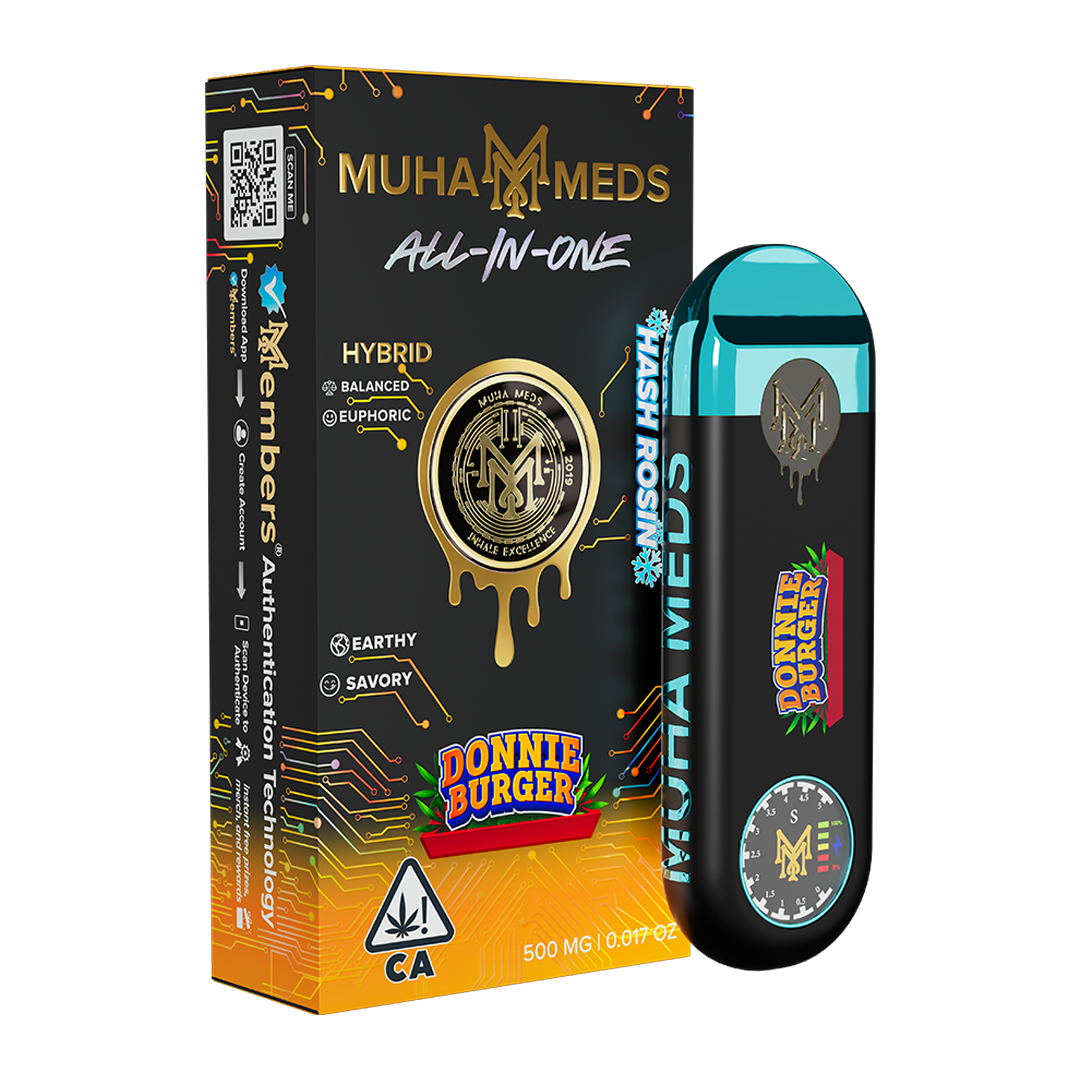
Muha Meds Donnie Burger All-In-One – Hybrid Hash Rosin
ALL-IN-ONE$30.00Original price was: $30.00.$20.00Current price is: $20.00. -
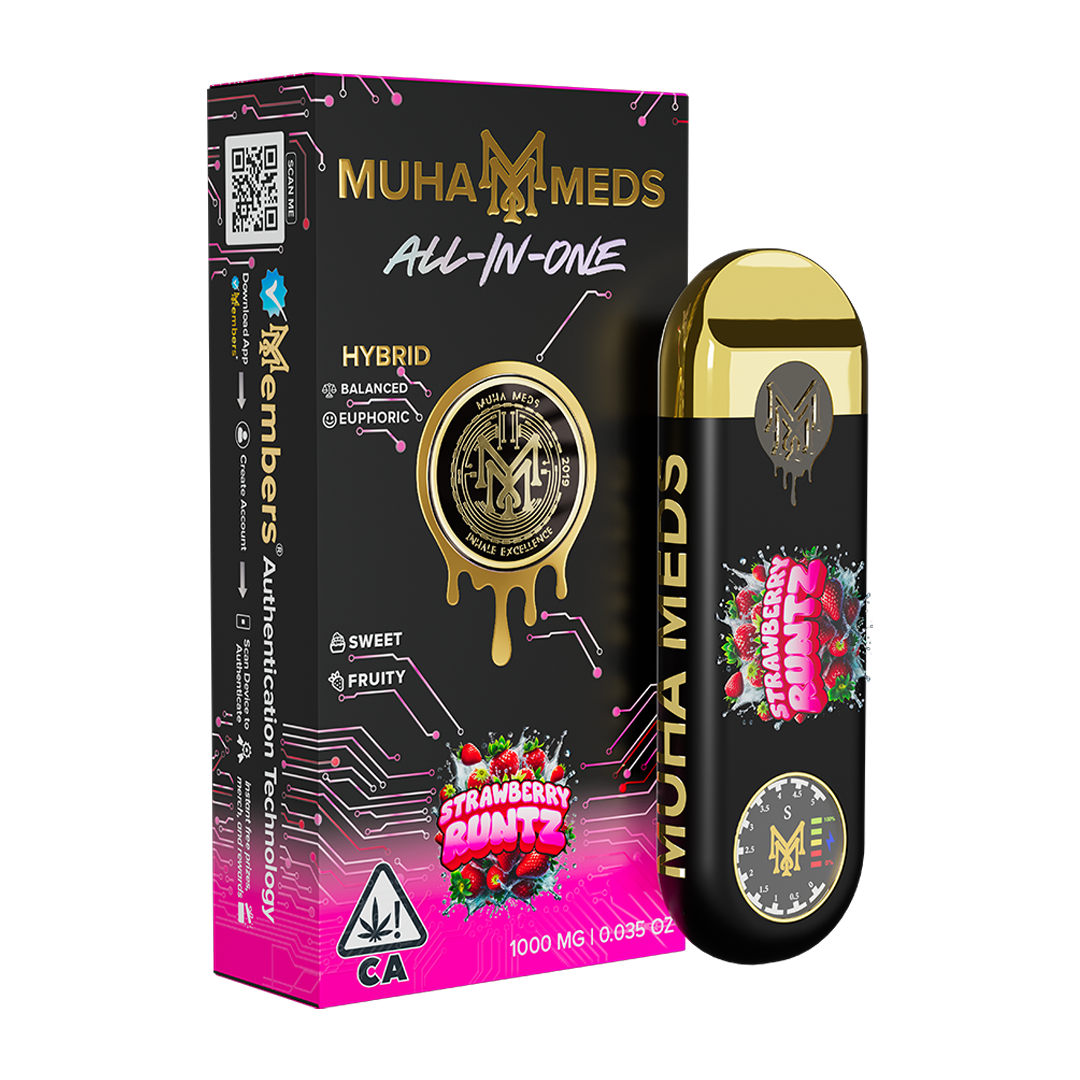
Muha Meds Strawberry Runtz All-In-One – Hybrid
ALL-IN-ONE$30.00Original price was: $30.00.$20.00Current price is: $20.00. -
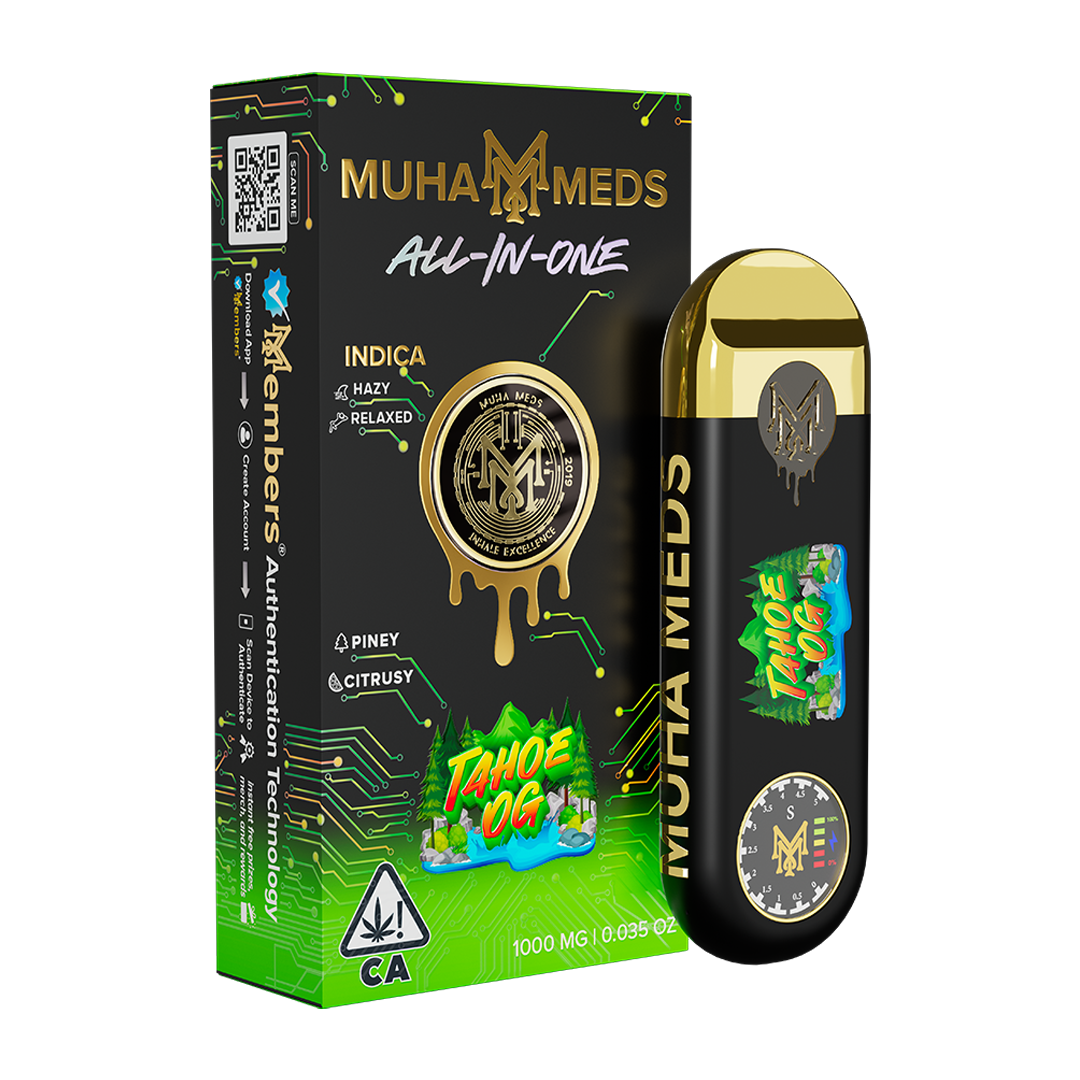
Muha Meds Tahoe OG All-In-One – Indica
ALL-IN-ONE$30.00Original price was: $30.00.$20.00Current price is: $20.00.