Introduction: Are Muha Meds Real?
Are Muha Meds real? This is a common question among people researching the cannabis brand, its product range, and the authenticity of products carrying its name. With branded cannabis products circulating through different markets and online platforms, understanding the difference between a genuine brand and a potentially counterfeit item is important.
The short answer is that Muha Meds is an established cannabis brand with a manufacturer-operated website and product verification resources. However, the existence of a real brand does not automatically mean that every product bearing its name is authentic, correctly labeled, or safe to use.
Counterfeit packaging, copied verification labels, misleading online listings, and unclear product origins can make authenticity difficult to assess. A product may look convincing while still requiring further investigation. Similarly, an unsuccessful verification attempt does not necessarily prove that an item is fake, because technical problems or an incorrect verification method can also cause difficulties.
If you are asking, “Are Muha Meds real or fake?”, the best approach is to examine the specific product rather than relying on appearances, advertising claims, or a seller’s assurances.
Start with the manufacturer’s official verification website at https://www.muhameds.com/verification. You can also read our Muha Meds verification guide for additional information about product codes, packaging checks, and authenticity warning signs.
This comprehensive guide explains what consumers should know about Muha Meds, how to investigate a product’s authenticity, what verification results mean, and why product safety requires more than checking a logo or QR code.
1. Is Muha Meds a Real Brand?
Yes. Muha Meds is a real cannabis brand with a public-facing website and a product verification system. Its official website provides information about its products and explains how customers can use different verification methods depending on the product generation.
The official verification page identifies two approaches: scratch-off verification codes for certain second-generation products and app-based scanning for third-generation products.
You can review these instructions directly on the official Muha Meds verification page.
However, it is important to distinguish three separate questions:
Is Muha Meds a real brand?
Is a particular item genuinely manufactured or authorized by the brand?
Has that particular item been independently demonstrated to meet relevant safety and quality requirements?
These questions are related, but they are not interchangeable.
For example, a counterfeit manufacturer may copy a genuine brand’s name, colors, logo, product photography, and packaging design. The existence of the genuine brand does not establish the authenticity of a product that imitates it.
Likewise, a genuine product may still require examination of its batch information, labeling, and available laboratory documentation.
When researching Muha Meds, use the manufacturer’s own resources as the starting point for authentication. Treat third-party claims as information to investigate rather than conclusive proof.
2. Why Do People Ask, “Are Muha Meds Real?”
Questions about whether Muha Meds is real often arise because consumers encounter different packaging designs, unfamiliar product listings, conflicting seller claims, or verification codes that do not behave as expected.
Several factors can create uncertainty.
Different product generations
Packaging and authentication procedures can change over time. A verification method that applies to one product generation may not apply to another.
Muha Meds’ published instructions distinguish between certain products that use scratch-off codes and newer products that use the Muha Members app.
Consequently, someone using an outdated tutorial or the wrong verification process may incorrectly assume that a product is fake.
Products sold through different channels
Products carrying a familiar brand name may appear in physical stores, online listings, social media posts, and informal marketplaces.
The seller’s identity and supply chain matter. A convincing photograph or product description does not establish that the item shown is the same item a customer receives.
Where cannabis is legally sold through licensed retailers, independently confirming the retailer’s authorization can provide important additional information.
Counterfeit packaging
Packaging can be copied. A fake item may display a logo, QR code, product name, or other visual details associated with the genuine brand.
For this reason, a product should not be declared authentic solely because its packaging appears professional.
Conflicting online information
Some websites publish product guides, while others make commercial claims about authenticity. These sources may not have the same relationship with the manufacturer.
Before relying on a claim, identify who published it, whether the manufacturer confirms it, and whether the information relates to the exact product being examined.
For additional background, explore the Muha Meds authenticity guide.
3. How to Verify Whether Muha Meds Products Are Real
If you want to determine whether a specific Muha Meds item is authentic, follow a consistent verification process.
Step 1: Locate the official verification resource
Visit https://www.muhameds.com/verification by entering the address directly into your browser.
Using the manufacturer’s website helps you avoid relying on an unfamiliar website that may imitate a verification service.
Be cautious when a QR code sends you to an unexpected domain or asks you to provide unnecessary personal or financial information.
Step 2: Identify the product’s verification method
Read the instructions supplied with your product and compare them with the manufacturer’s current guidance.
According to the official verification page:
Certain second-generation products use a scratch-off verification code.
Third-generation products use the Muha Members app to scan the verification code.
Do not assume that every Muha Meds product uses an identical code, sticker, or scanning procedure.
If you cannot determine which method applies, consult the manufacturer before drawing conclusions about authenticity.
Step 3: Enter or scan the code correctly
Follow the manufacturer’s instructions carefully.
For a scratch-off code, check that the characters have been entered accurately. For an app-based code, use the official app access links provided by the manufacturer’s website.
Avoid submitting product codes to unrelated websites simply because they promise instant authentication.
Step 4: Compare the verification result with the item
Do not stop after receiving a successful message.
Check whether the returned information corresponds to the product you are investigating. Where information is available, compare the product identity and other relevant details with the packaging.
If the result is inconsistent, unclear, or unsuccessful, preserve the packaging and contact the manufacturer for clarification.
A failed code does not automatically establish that an item is counterfeit. Equally, a successful code alone should not be treated as an absolute guarantee that the physical item is genuine.
Step 5: Investigate any unresolved concerns
If the code fails repeatedly, the packaging appears altered, or the information does not match, do not use the product while the concern remains unresolved.
Document the issue, retain the purchase receipt and packaging, and contact the manufacturer or the seller through independently verified channels.
For a more detailed walkthrough, visit How to Verify Muha Meds.
4. What Are the Warning Signs of Fake Muha Meds?
There is no single visual characteristic that can conclusively identify every counterfeit product. Nevertheless, certain inconsistencies justify additional investigation.
Inconsistent packaging details
Look for discrepancies in the printed product name, spelling, labeling, manufacturer information, or other details that can be checked against reliable product information.
Poor printing, unexpected design differences, or unclear labeling may warrant further investigation.
However, packaging changes can occur, and differences alone do not prove counterfeiting.
Missing or damaged verification labels
A missing security label, visibly altered sticker, or damaged verification area should raise questions.
The absence of an expected code may indicate a packaging problem, an incompatible product version, or an authenticity concern.
Compare the item with the manufacturer’s instructions for its specific generation before reaching a conclusion.
Verification results that do not match
A code that produces a product description inconsistent with the item should be investigated.
Possible explanations include an incorrect entry, an unsuitable verification method, a technical problem, or a more serious authenticity concern.
Do not ignore a discrepancy simply because the product otherwise looks convincing.
Unclear product origin
If the seller cannot explain where the item came from or provide credible documentation, you may have limited ability to establish its authenticity.
In regulated markets, check whether the retailer is properly licensed and whether the purchase complies with applicable law.
A seller’s use of a familiar brand name does not independently establish a legitimate supply chain.
Unverifiable laboratory reports
Laboratory documentation should identify the sample tested and the relevant testing laboratory. Where applicable, the report should also identify the product or batch to which the results relate.
A generic certificate, an unrelated report, or a document that cannot be independently checked should not be treated as proof that your particular product has been tested.
Unsupported authenticity claims
Statements such as “100% genuine,” “official product,” or “fully tested” are claims that require supporting evidence.
The same principle applies to online advertisements, product descriptions, and social media posts.
Important: These warning signs are reasons to investigate, not definitive proof of a counterfeit. The most reliable approach combines official verification, product documentation, and information about the item’s source.
5. Can a Fake Muha Meds Product Have a Real QR Code?
Yes. A QR code can be copied, reproduced, or placed on packaging that does not contain the original manufacturer’s product.
This is why scanning a code should be treated as one part of an authentication process rather than the only test.
Consider three possible situations.
Situation one: The code cannot be verified.
The code may have been entered incorrectly, the wrong verification process may have been used, or a technical issue may be preventing verification. It is also possible that the product requires further investigation.
Situation two: The code verifies, but other details conflict.
If the verification result identifies a different product or the packaging contains contradictory information, the discrepancy should not be ignored.
Situation three: The code verifies and the details appear consistent.
This is useful evidence, but it does not independently prove the condition, contents, storage history, or safety of the physical item.
The manufacturer’s verification system is the appropriate starting point. If the result remains uncertain, contact the manufacturer directly.
For further explanation, see our authentic Muha Meds product guide.
6. Are Muha Meds Vape Products Real?
Muha Meds has product categories that include cartridges and all-in-one devices. However, the fact that a product category exists does not establish that a particular cartridge or disposable device is authentic.
When examining an item, consider the following questions:
Does the manufacturer’s verification process recognize the product?
Does the verification result correspond to the product’s identity?
Is the packaging consistent with the applicable product instructions?
Is the seller’s identity and authorization independently verifiable?
Is relevant product or batch documentation available?
Are there unresolved concerns about the product’s origin or contents?
Do not use an item simply because it resembles a product shown in a photograph.
A visual comparison may help identify obvious discrepancies, but copied packaging can make visual identification unreliable.
You can find related informational pages in our Muha Meds cartridges collection and Muha Meds All-In-One collection.
These pages can help you navigate product information on our website. Their presence should not be interpreted as independent confirmation that any particular item has been authenticated by the manufacturer.
7. Are Muha Meds Gummies and Other Products Real?
The same authenticity principles apply to other products sold under the Muha Meds name.
Whether you are researching gummies, pre-rolls, cartridges, or all-in-one devices, the exact product and its supporting documentation matter more than the category name.
For gummies, review the product labeling, ingredients, declared cannabinoid content, applicable warnings, and any available batch-specific testing information.
For pre-rolls, examine the labeling, product identity, and available documentation. Do not assume that packaging alone establishes the source or contents.
For cartridges and all-in-one devices, consider both the product identity and the information available about the contents and device.
Explore our Muha Meds gummies collection and Muha Meds pre-rolls collection for related product information.
Regardless of the product type, a flavor name, familiar design, or matching logo does not prove authenticity.
8. Does Authentic Muha Meds Mean a Product Is Safe?
No. Authenticity and safety are separate questions.
Authentication concerns whether a product is genuinely associated with the manufacturer. Safety assessment concerns the product’s contents, quality, labeling, condition, and potential health effects.
Even when a product’s identity is established, that does not mean it is risk-free.
The U.S. Centers for Disease Control and Prevention explains that THC-containing cannabis products can impair memory, attention, and decision-making. Cannabis concentrates used in vaping may contain additives or contaminants, and vaping has been associated with lung injury.
Read the CDC’s Cannabis Frequently Asked Questions for evidence-based information about cannabis and its health risks.
The U.S. Food and Drug Administration has also warned consumers about THC-containing vaping products obtained from informal sources. Its THC vaping product safety update explains the public health concerns associated with vaping-related lung injuries.
These warnings are general information about cannabis vaping; they should not be misrepresented as proof that a specific Muha Meds product is counterfeit or contaminated.
If you cannot establish a product’s origin or have unresolved concerns about its contents, do not use it. Seek medical advice if you experience symptoms after exposure to a vaping product.
9. What Does a Certificate of Analysis Tell You?
A Certificate of Analysis, commonly called a COA, is a laboratory report documenting results for a sample tested under specified conditions.
Depending on the product and the laboratory, a report may include cannabinoid measurements and tests for certain contaminants.
When reviewing a COA, pay attention to the following details.
Laboratory identity: Identify the laboratory that performed the testing and determine whether its credentials and report can be independently verified.
Sample identity: Confirm that the document relates to the product or batch under investigation.
Testing date: Consider when the sample was tested and whether the report is relevant to the product you are examining.
Test scope: Determine which substances or contaminants were actually tested. A report covering potency does not necessarily cover every possible contaminant.
Reported results: Read the measurements and their stated units rather than relying on a general claim that the product is “lab tested.”
Batch information: Where batch identifiers are provided, compare them with the available product documentation.
A COA does not automatically authenticate a product. Someone could present a genuine report relating to a different sample, or a report may be incomplete or difficult to verify.
Similarly, a verification code does not replace laboratory analysis.
The two forms of evidence answer different questions, and neither should be treated as a universal guarantee of safety.
10. How to Investigate a Suspicious Muha Meds Product
If you suspect that a product is fake, a structured approach can help you preserve useful information and avoid premature conclusions.
First, stop using the product while the authenticity or safety concern remains unresolved.
Second, retain the original packaging, receipt, order confirmation, and any product documentation. Avoid discarding materials that may help identify the item.
Third, photograph the packaging and verification label if doing so is safe. Keep the photographs for your own records and avoid publicly posting security codes.
Fourth, access the manufacturer’s official website independently and follow the verification procedure that applies to the product.
Fifth, document the exact verification response. Record any error message and note whether the displayed product details match the item.
Sixth, contact the manufacturer through a contact channel obtained from its independently verified website. Explain the concern and provide the product information requested.
Finally, if you bought the item from a retailer, contact the seller to report the discrepancy and ask about the available resolution process. Where relevant, report suspected illegal or unsafe products to the appropriate regulatory authority.
You can also visit the Muha Meds Flavor Contact Us page for questions about our website and its published information. For definitive manufacturer authentication, however, use the manufacturer’s own verification and support channels.
11. Is an Online Website Using the Muha Meds Name Official?
Not necessarily.
A website may publish information about a brand, list products bearing its name, or use similar branding without being owned or authorized by the manufacturer.
The correct way to establish a website’s relationship with a brand is to look for reliable evidence of that relationship, rather than assuming that the domain name or website design proves official status.
Check the following:
Whether the manufacturer identifies the website as an official resource.
Whether the website clearly identifies the business responsible for its content and transactions.
Whether product authenticity claims can be confirmed independently.
Whether the seller’s licensing and authorization can be verified where applicable.
Whether the website’s claims about shipping, testing, and product origin are supported by credible documentation.
For manufacturer information and product authentication, use Muha Meds’ official website.
Muhamedsflavor.com provides its own product information and educational guides. Visitors should not assume that use of the Muha Meds name establishes manufacturer ownership, endorsement, or authorization.
This distinction is important for readers and publishers alike. Transparent descriptions of a website’s role help consumers understand where information comes from and how to verify it.
12. Common Mistakes to Avoid When Checking Muha Meds Authenticity
Consumers sometimes rely on a single clue and overlook other important evidence.
Mistake one: Trusting packaging alone
A professional appearance is not proof of authenticity. Packaging can be copied or altered.
Mistake two: Assuming every failed code means fake
Verification problems can have multiple causes. Check the instructions, confirm the code entry, and contact the manufacturer if necessary.
Mistake three: Treating every successful scan as a safety guarantee
A successful authentication result does not establish that the item is free from contaminants or has been stored properly.
Mistake four: Trusting a seller’s claims without checking them
A seller may make genuine or misleading claims. Independent verification is more useful than relying solely on promotional statements.
Mistake five: Accepting an unrelated laboratory report
The report should relate to the product or batch being investigated. A certificate for another item is not evidence about your specific product.
Mistake six: Ignoring legal restrictions
Cannabis laws and age restrictions vary by location. Before acquiring or possessing a cannabis product, check the laws that apply to you.
Mistake seven: Continuing to use a product despite serious concerns
If the item’s identity or contents cannot be established, do not use it while the issue remains unresolved.
Avoiding these mistakes helps you distinguish between a product that has been properly verified and one that merely appears genuine.
13. Frequently Asked Questions About Muha Meds Authenticity
Are Muha Meds real or fake?
Muha Meds is a real cannabis brand. However, individual products bearing its name must be assessed separately. Use the manufacturer’s official verification system and investigate any discrepancies in the product information.
How can I check if my Muha Meds product is real?
Visit https://www.muhameds.com/verification and follow the instructions that match your product generation. Compare the result with the product details, inspect the packaging, and investigate any unresolved concerns with the manufacturer.
Do all Muha Meds products have the same verification code?
Not necessarily. The manufacturer’s published instructions describe different verification methods for certain product generations. Check the official instructions for the exact item you are examining.
Can fake Muha Meds products have QR codes?
Yes. QR codes can be copied or reproduced. Scan through the manufacturer’s official verification process and review the result alongside the product information and source.
What if my Muha Meds verification code does not work?
Check for entry errors and confirm that you are using the correct verification method. If the problem persists, contact the manufacturer. A failed attempt alone does not conclusively establish that the item is counterfeit.
Are Muha Meds products safe if the code verifies?
A successful code does not guarantee safety. Authentication and laboratory testing serve different purposes, and cannabis products can pose health risks even when their identity is established.
Can I identify authentic Muha Meds by its packaging?
Packaging inspection can reveal discrepancies, but appearance alone cannot prove authenticity. Combine the inspection with official verification, relevant product documentation, and information about the source.
Does a laboratory report prove that a Muha Meds product is genuine?
No. A laboratory report documents results for the sample tested. It does not necessarily prove that the physical item in your possession came from the manufacturer. Check the report’s identity, testing scope, and relevant batch details.
Is Muhamedsflavor.com the official Muha Meds website?
Do not assume that a website is manufacturer-owned or authorized simply because it uses a brand name. For official manufacturer information and verification, visit https://www.muhameds.com/.
What should I do if I suspect a counterfeit Muha Meds product?
Stop using it while the concern remains unresolved. Preserve the packaging and purchase information, document the verification result, and contact the manufacturer or seller through independently confirmed channels.
Where can I read more about Muha Meds verification?
Read the Muha Meds verification guide and the authentic Muha Meds guide for further information.
14. Final Verdict: Are Muha Meds Real?
So, are Muha Meds real? Yes, Muha Meds is an established cannabis brand with a manufacturer-operated website and published product verification instructions. However, that does not establish the authenticity of every item sold under its name.
The most reliable way to investigate a particular product is to use the manufacturer’s official verification system, check that the returned information matches the item, examine the packaging for inconsistencies, and review any relevant laboratory documentation.
Remember that authentication codes, packaging, and laboratory reports each have limitations. A convincing appearance is not proof, a failed code is not automatically conclusive, and a successful code is not a guarantee of product safety.
If you are researching Muha Meds for the first time, begin with the official verification page. Then consult our Muha Meds authenticity guide and step-by-step verification article for additional context.
Above all, prioritize reliable information, follow the laws that apply to your location, and do not use a product when its identity or contents remain uncertain.
Disclaimer: This article is for general informational and educational purposes only. It does not independently authenticate any product, guarantee product safety, or establish that a retailer is authorized by the manufacturer. Cannabis products may be subject to age restrictions and legal limitations. Consult official resources and applicable regulations before making decisions.
-
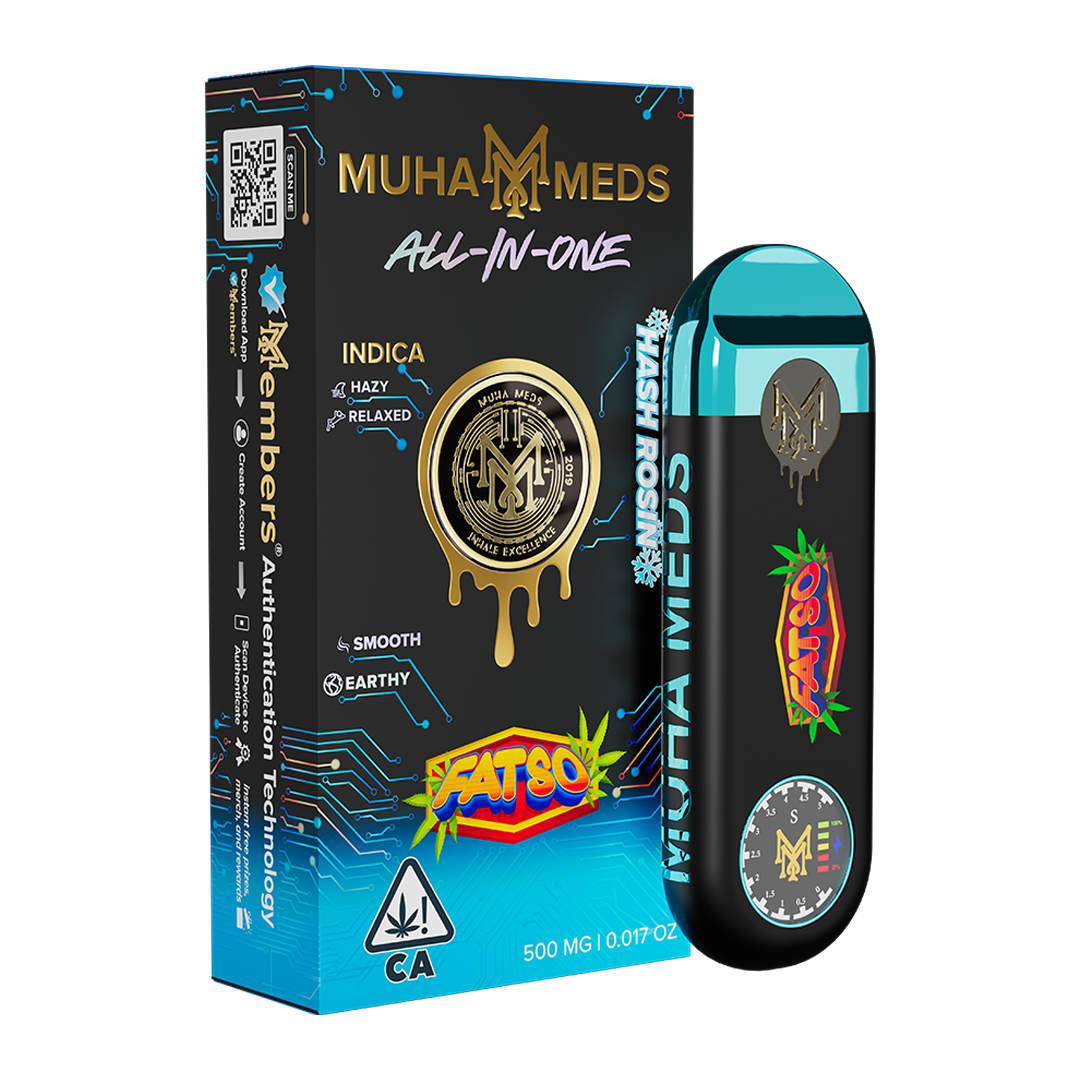
Muha Meds Fatso All-In-One – Indica Hash Rosin
ALL-IN-ONE$30.00Original price was: $30.00.$20.00Current price is: $20.00. -
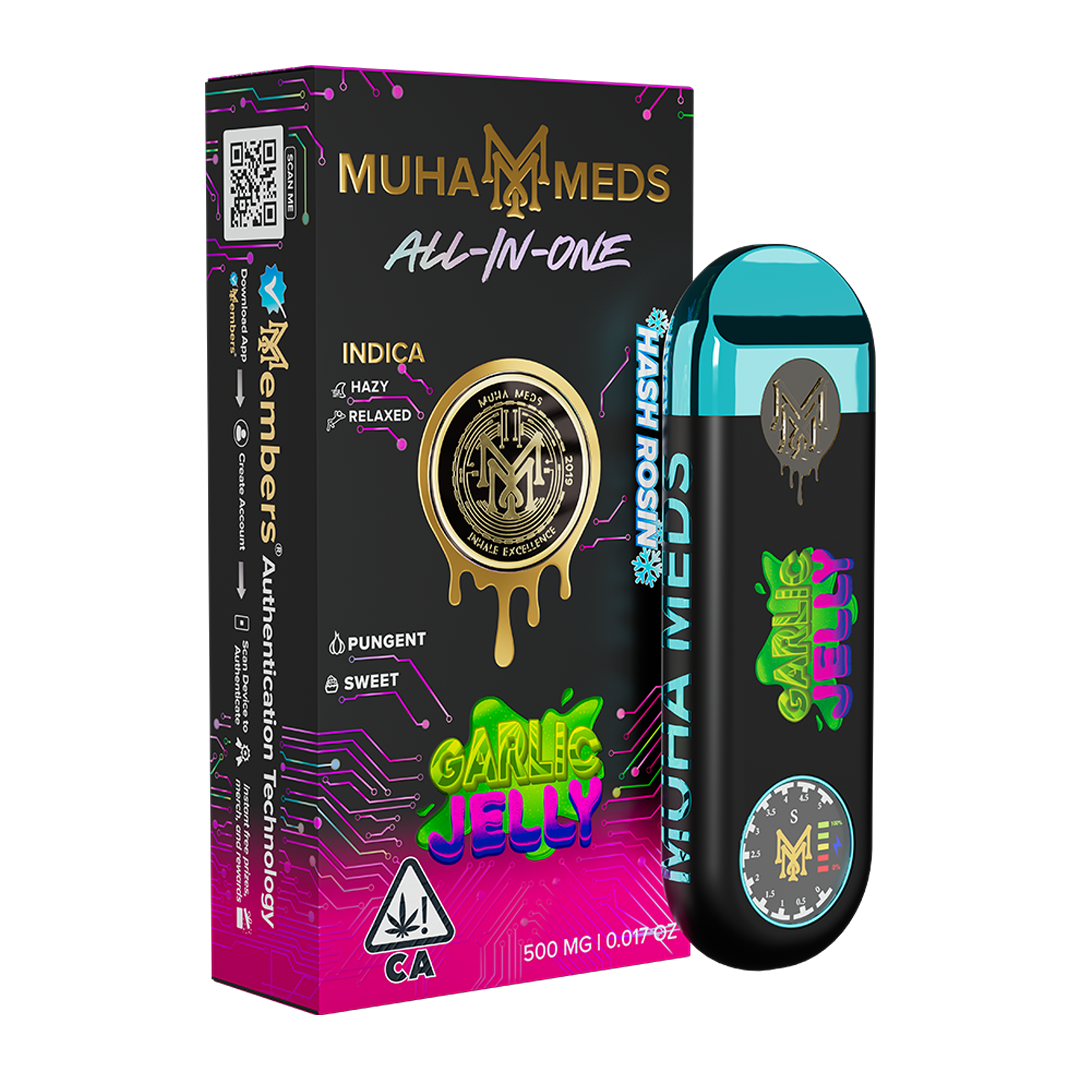
Muha Meds Garlic Jelly All-In-One – Indica Hash Rosin
ALL-IN-ONE$30.00Original price was: $30.00.$20.00Current price is: $20.00. -
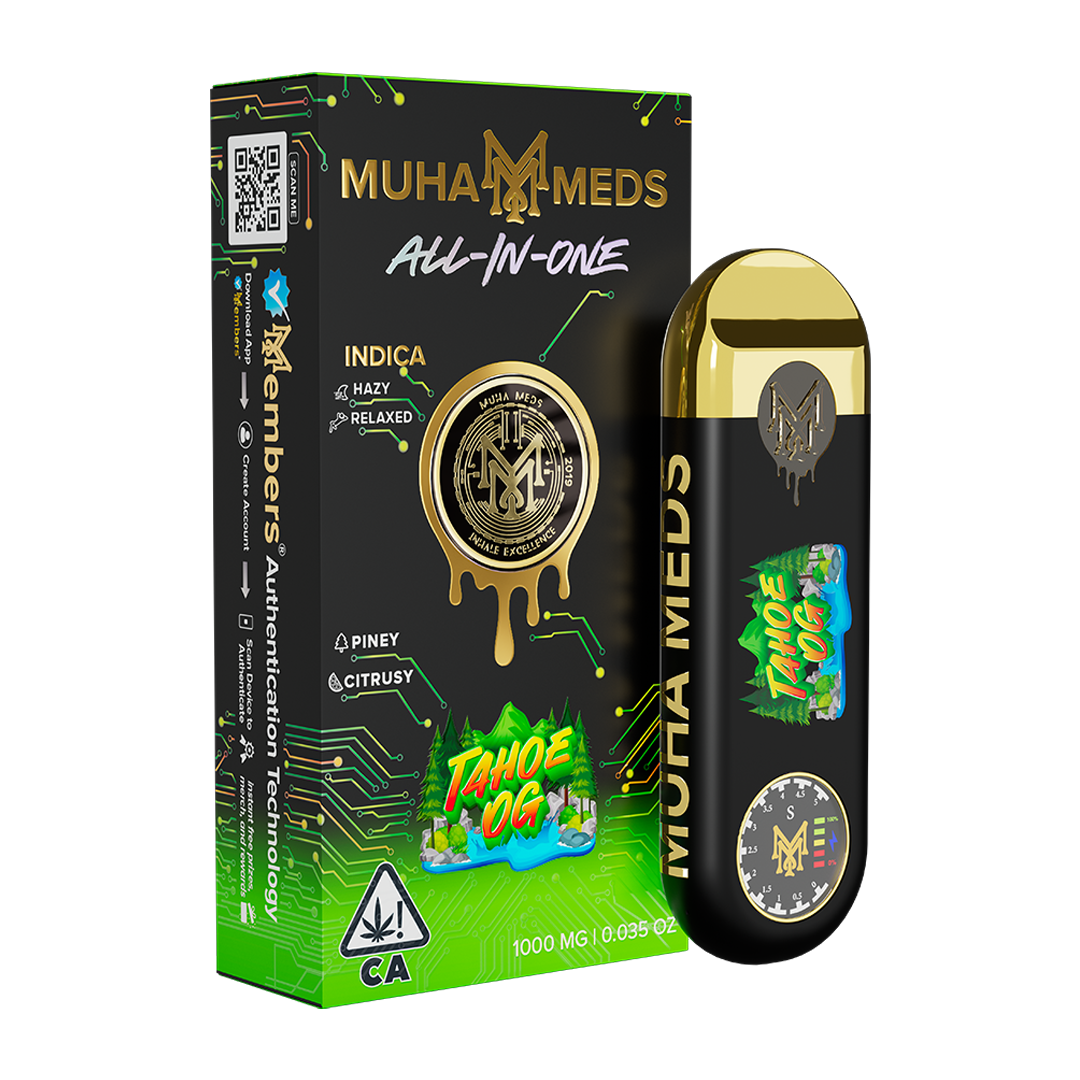
Muha Meds Tahoe OG All-In-One – Indica
ALL-IN-ONE$30.00Original price was: $30.00.$20.00Current price is: $20.00.